

When you’re shopping for insoles, you can’t just grab whatever’s on the shelf. You need to know how to review insoles properly—because the right pair can transform your comfort level, while the wrong one leaves your feet aching at the end of the day. Here’s what separates a smart buyer from someone who wastes money on mediocre support.
Whether you’re dealing with heel pain, flat feet, or just general fatigue from standing all day, the quality of your insoles matters. But here’s the thing: most people don’t know what to look for when they review insoles. They rely on marketing hype instead of actual performance metrics.
Table of Contents
- What Are Insoles and Why Review Them?
- Material Quality: The Foundation of Good Insoles
- How to Test Arch Support When You Review Insoles
- Cushioning and Durability: What to Examine
- Fit and Shoe Compatibility Matters
- Real Performance Indicators vs Marketing Claims
- Quick Comparison: Insole Types
- Frequently Asked Questions
- Visit Our Branches
What Are Insoles and Why Review Them?
Insoles—also called orthotics or foot inserts—are supportive devices you place inside your shoes to improve comfort, correct foot alignment, and reduce pain. When you review insoles, you’re essentially asking: Does this product actually deliver what it promises?
Not all insoles are created equal. The difference between a $10 foam insert and a properly engineered support system isn’t just price—it’s how your feet feel after eight hours of wear. A good pair addresses the root cause of foot problems, while cheap alternatives just add cushioning without solving alignment issues.
According to podiatric research, properly designed insoles can reduce foot pain by up to 76% in patients with chronic conditions like plantar fasciitis and flat feet.
Journal of the American Podiatric Medical Association
When you review insoles, you’re looking at three core functions: arch support (the structural element), cushioning (shock absorption), and stability (keeping your foot aligned). All three matter—neglect one, and the whole system fails.
Material Quality: The Foundation of Good Insoles
Start here when you review insoles. The material tells you everything about durability and performance.
Premium materials vs. cheap alternatives: High-quality insoles use EVA foam, memory foam, or specialized polymers that maintain their shape after months of use. Budget insoles often use low-density foam that compresses in weeks, losing all support.
- EVA (Ethylene-Vinyl Acetate) — Lightweight, responsive, maintains shape under pressure. This is industry standard for quality insoles.
- Memory Foam — Conforms to your foot’s unique shape. Great for custom fit, but watch for density; cheaper versions flatten too quickly.
- Gel Inserts — Excellent shock absorption, especially if you have heel pain. More expensive but lasts longer than foam alone.
- Polyurethane — Durable, supports arch structure, resists breakdown. Often found in orthopedic-grade insoles.
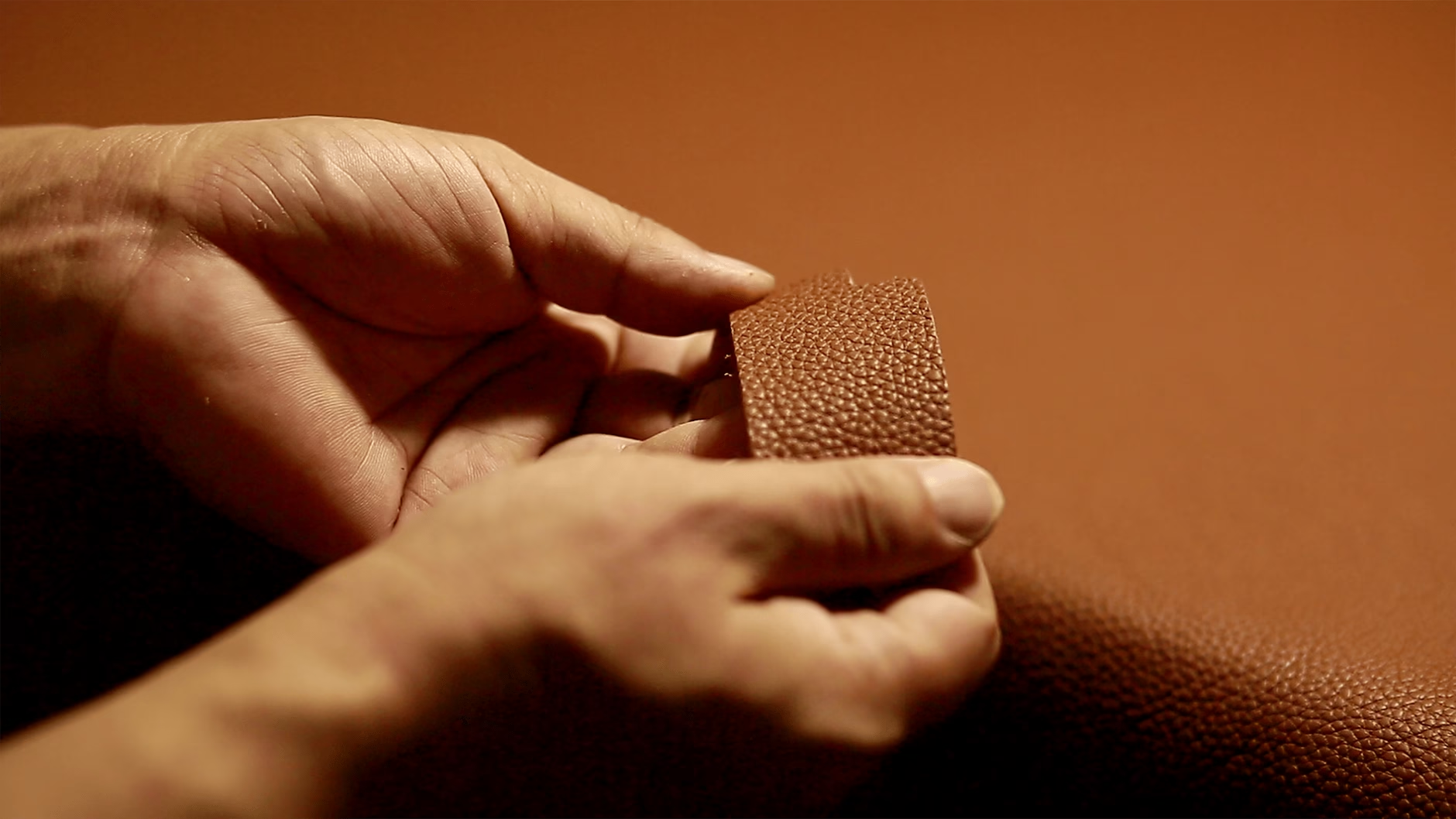
How to test: Press your thumb into the insole material. Quality options spring back immediately. Cheap foam stays compressed for several seconds—that’s a red flag when you review insoles.

Real talk: If an insole feels thin and flimsy in your hand, it won’t hold up under your body weight. Most people upgrade to quality insoles after their first cheap pair flattens within 3-4 months.
Check the manufacturer’s specifications, too. Reputable brands list material composition, density ratings, and durability expectations. If the product description is vague? That’s usually a sign of inferior construction.
How to Test Arch Support When You Review Insoles
Arch support is where most people fail to review insoles properly. They focus on comfort immediately, but arch support is a structural feature that prevents future pain.
What good arch support feels like: Your foot shouldn’t feel like it’s sinking. The arch (that curve between your heel and ball of foot) should feel cradled, not pushed up aggressively. Balance is key.
- Stand barefoot on a hard surface and notice your natural arch height
- Insert the insoles and stand again—your arch should feel supported without strain
- Walk for 10-15 minutes indoors; discomfort should fade, not increase
- Check that your foot doesn’t roll inward or outward (this indicates poor arch alignment)
- Inspect the insole’s arch area; it should be firm, not soft or compressible
When you review insoles for arch support, look at the shape too. Quality options have a pronounced curve that matches typical foot anatomy. Flat or weakly curved insoles won’t provide real support, especially if you have arch support needs.
Here’s something most reviews miss: arch support isn’t one-size-fits-all. People with flat feet need aggressive arch support, while high-arched feet need moderate support. That’s why foot scanning technology has become popular—it identifies your exact arch type before you pick insoles.
A study in Prosthetics and Orthotics International found that custom-scanned arch support reduced overpronation (inward foot rolling) in 89% of test subjects within two weeks.
Prosthetics and Orthotics International Journal
Cushioning and Durability: What to Examine
Cushioning absorbs shock from walking and standing. When you review insoles, feel the heel and ball-of-foot areas—these take the most impact.
Density and compression resistance: Press your thumb into the heel cup of a quality insole. It should compress slightly, then resist further pressure. Budget insoles compress deeply, offering false comfort that collapses quickly.
Durability depends on material quality and design. Expect these timelines:
- Budget foam insoles (under ₱500): 2-4 months before noticeable compression
- Mid-range options (₱500-₱1,500): 6-12 months of reliable support
- Premium orthopedic insoles (₱2,000+): 18-36 months depending on activity level
And here’s the reality: The cheapest insoles feel best on day one because the padding is soft. But soft padding breaks down fast. When you review insoles, ignore the immediate comfort test—think about month three and month six instead.
Check for reinforcement at high-stress areas: the heel cup (most impact), the ball-of-foot region (propulsion area), and the arch (structural load). Quality insoles reinforce these zones with denser material or additional layers.
Fit and Shoe Compatibility Matters
The best insoles in the world won’t help if they don’t fit your shoes properly.
When you review insoles, match them to your shoe type first:
- Shoe depth: Some shoes have minimal internal space; thick insoles won’t fit. Measure your current insole height and compare to the new option.
- Shoe width: Insoles for narrow shoes differ from wide-fit options. A wide-shoe insole stuffed into tight footwear causes pressure points.
- Shoe activity: Running shoes need different support than dress shoes. Athletic insoles are firmer; casual shoes can use softer support.
- Heel height: High-heeled shoes create different arch angles than flat shoes. Some insoles work for both; others don’t.
And here’s what people overlook: If your insole extends past the shoe’s sole, you’ll feel it rolling against the shoe wall. Quality insoles come in multiple lengths, or they’re trimmable. Always check if you need the full, 3/4, or half length.
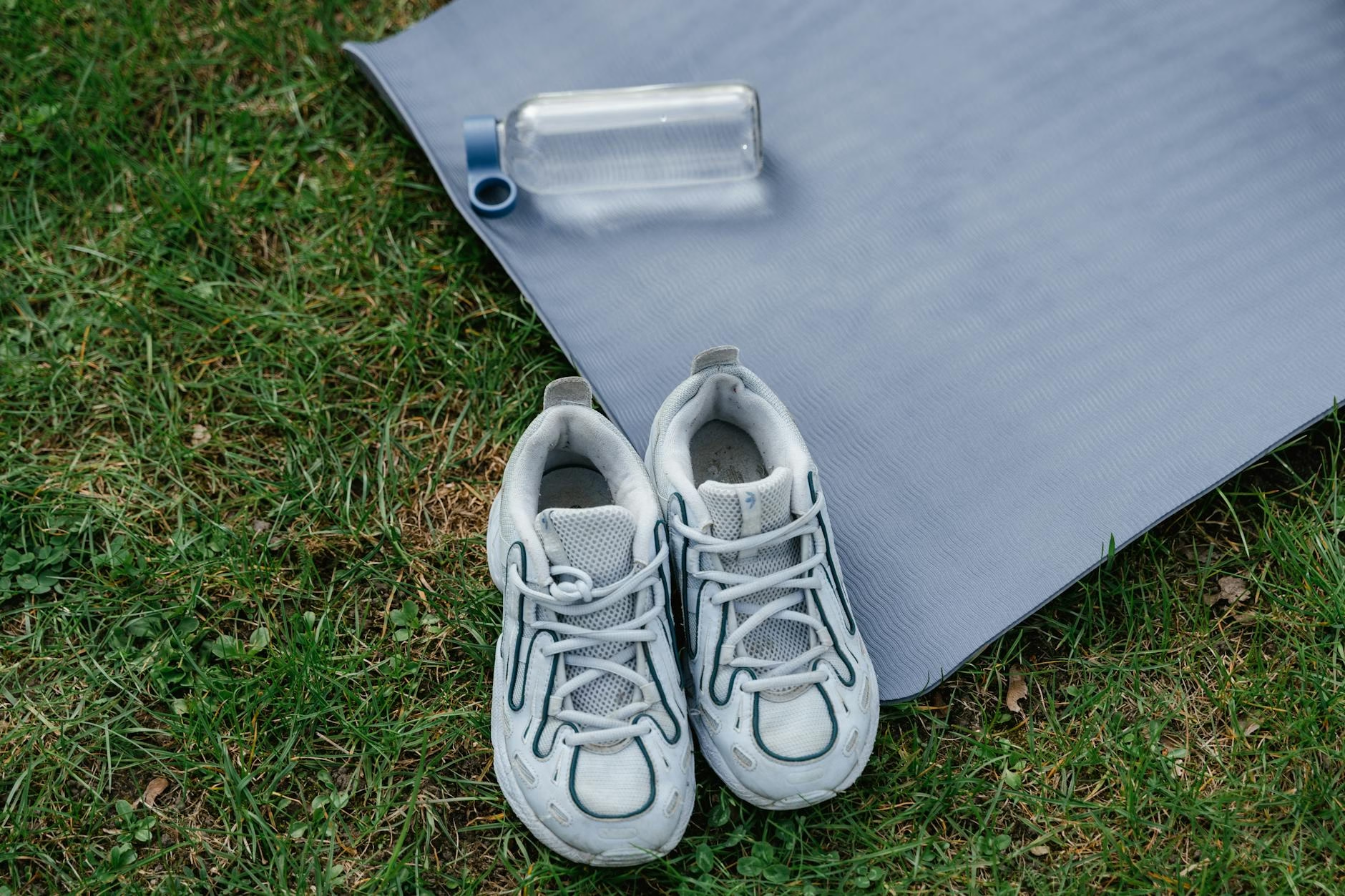
Many insoles feel amazing in the store but cause blisters after an hour because they don’t sit correctly inside your shoe. When you review insoles, always plan for a 2-3 day adjustment period. Your foot needs time to adapt to proper alignment.
Real Performance Indicators vs Marketing Claims
Marketing language can be misleading. Let me break down what actually matters when you review insoles.
What to ignore: Words like “revolutionary,” “game-changing,” or “miracle cure” aren’t performance metrics. Neither is “maximum comfort”—comfort is subjective. Brands use these terms because they can’t be measured or challenged.
What to look for:
- Specific certifications: Look for medical device certifications (FDA approval in the US, or local health board approval in the Philippines). These require actual testing.
- Actual density numbers: Quality brands list EVA density ratings (measured in kg/m³). Higher density = better durability. If the brand won’t specify, it’s probably low-grade.
- Durability warranties: Premium insole manufacturers offer 2-5 year warranties. Budget brands rarely do.
- Tested customer data: Claims like “reduces heel pain in 70% of users” are verifiable; generic praise isn’t. Ask where the data comes from.
- Professional recommendations: If podiatrists consistently recommend a brand, that’s meaningful. Check medical practice websites in your area.
Real talk: If a brand can’t or won’t provide specifics about materials, construction, or testing, that’s a sign they’re hiding something.
According to Wikipedia’s orthotics entry, legitimate orthotic devices are prescribed or fitted by podiatrists and based on anatomical principles. Consumer-grade insoles should follow similar standards.
When you review insoles online, check independent testing. Some podiatry organizations publish comparative reviews. User reviews help too, but skip the obvious marketing posts (glowing 5-star reviews with no detail). Real feedback mentions specific problems: “My arch support lasted 6 months before flattening” or “These helped my heel pain within a week.”
Quick Comparison: Insole Types at a Glance
| Insole Type | Best For | Material | Typical Price | Durability | Arch Support |
|---|---|---|---|---|---|
| Budget Foam | Temporary cushioning | Low-density EVA | ₱200–500 | 2–4 months | Minimal |
| Memory Foam | Custom fit, mild pain | Viscoelastic foam | ₱600–1,200 | 6–9 months | Moderate |
| Orthopedic (Gel/EVA blend) | Plantar fasciitis, heel pain | Reinforced EVA + gel | ₱1,500–2,500 | 12–18 months | Strong |
| Custom-Molded | Severe foot conditions | Medical-grade polymers | ₱3,000–6,000 | 24–36 months | Maximum |
| Sports/Athletic | Running, high-impact activity | Responsive EVA, carbon fiber shank | ₱1,200–2,000 | 12–15 months | High |
This table matters because it shows you: price doesn’t guarantee quality, but the cheapest options rarely deliver long-term results. Mid-range orthopedic insoles (₱1,500–2,500) offer the best value when you review insoles for everyday use.
Frequently Asked Questions
How long should I wear new insoles before deciding if they work?
Give your feet 2-3 weeks to adapt to new insoles. Your foot alignment changes gradually, and initial discomfort often fades. If pain increases after three weeks or blisters develop, the insoles may not be the right fit for your shoe shape or arch type.
Can I use the same insoles in multiple pairs of shoes?
Not ideally. Different shoes have different depths, widths, and heel heights. Moving insoles between shoes stresses them and can reduce lifespan. If you need versatility, buy insoles specifically designed for multiple shoe types, or get separate pairs.
What’s the difference between insoles and orthotics?
Insoles are over-the-counter products you can buy without professional fitting. Orthotics are custom-made devices designed by podiatrists based on your specific foot anatomy. Orthotics cost more but last longer and address individual biomechanical issues.
How do I know if an insole has proper arch support?
Press your finger into the arch area. Quality arch support feels firm and structured, not soft or squishy. When you stand, your arch should feel cradled. If the insole feels flat or your foot rolls inward, it lacks proper support.
Are expensive insoles always better?
Not always. Premium pricing sometimes reflects brand reputation rather than material quality. That said, the cheapest options rarely offer adequate support or durability. The sweet spot is usually mid-range to upper-mid-range products from established brands with verifiable credentials.
Can insoles fix overpronation or flat feet permanently?
Insoles manage and reduce symptoms, but they don’t permanently change foot structure. They provide daily support and alignment, which alleviates pain and slows degeneration. Once you stop wearing them, the symptoms typically return. If you have overpronation, you’ll likely need insoles long-term for comfort.
Visit Our Branches
Fixifoot Metro Manila
Visit our main branch in Metro Manila for professional foot scanning and personalized insole fitting. Our team can help you review insoles and find the exact support your feet need. Located throughout Metro Manila with extended hours for your convenience.
Fixifoot Cebu
Now serving Visayas region. Our Cebu branch offers the same expert consultation and foot scanning technology as Metro Manila. Whether you need to review insoles or require custom orthopedic solutions, we’re here to help.
When you’re ready to review insoles properly, the expert guidance makes all the difference. Don’t guess—get your feet scanned and fitted by professionals who understand foot biomechanics. Stop wasting money on insoles that don’t work for your unique foot structure. Visit Fixifoot today, and step into real support.