
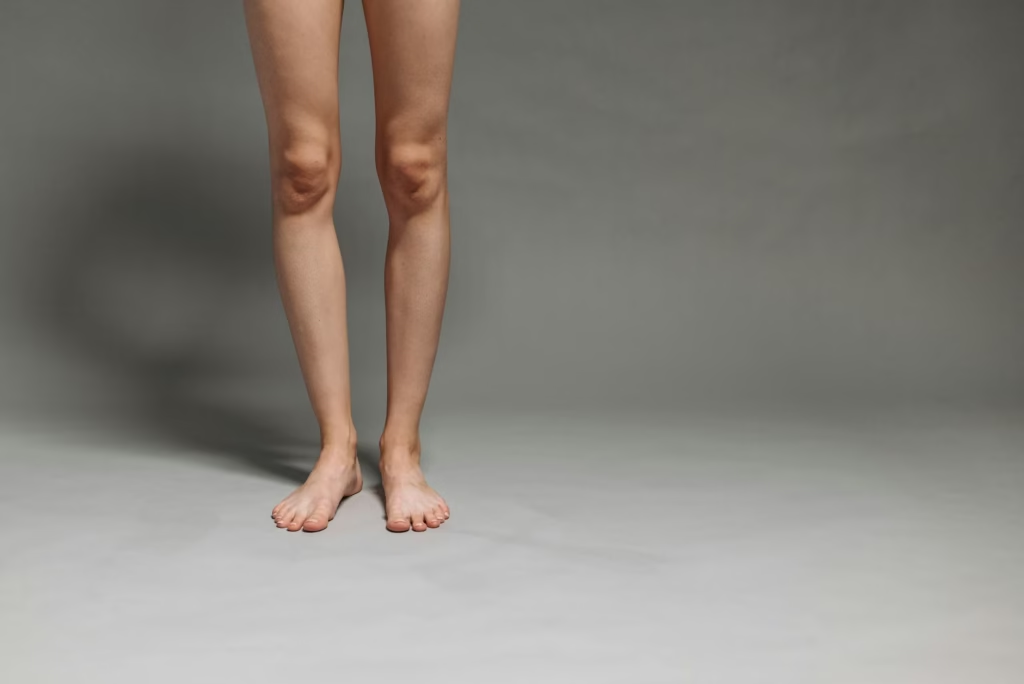
Flat feet can be a real pain, literally. But here’s the thing: effective arch support can make a monumental difference. It’s not just about comfort; it’s about correcting biomechanics and preventing further issues up the kinetic chain.
Look, your feet are the foundation of your entire body. When that foundation isn’t stable, problems can ripple through your ankles, knees, hips, and even your back. That’s why understanding and utilizing proper arch support is so important.
This article will break down exactly what arch support is, how it works, and how you can find the perfect solution for lasting relief. We’ll cover everything from simple inserts to custom orthotics, giving you the knowledge to step confidently.
Table of Contents
- What is Arch Support and Why Does it Matter for Flat Feet?
- How Arch Support Improves Foot Mechanics and Comfort
- Types of Arch Support: Finding Your Ideal Solution
- How to Choose the Best Arch Support for Your Feet: A Step-by-Step Guide
- The Lasting Benefits of Consistent Arch Support Use
- Separating Fact from Fiction: Common Arch Support Myths
- Frequently Asked Questions About Arch Support
- Taking the Next Step Towards Healthier Feet
What is Arch Support and Why Does it Matter for Flat Feet?
Arch support refers to devices, often insoles or orthotics, designed to uphold the natural curvature of your foot’s arch, particularly the medial longitudinal arch. For individuals with flat feet, this support is critical because their arches have either collapsed or never fully developed, leading to the entire sole of the foot making contact with the ground.
Honestly? This lack of natural arch can cause a cascade of problems. Without proper arch support, your feet can’t absorb shock effectively, leading to pain not just in the feet, but also in the ankles, knees, hips, and lower back. It’s a foundational issue, and addressing it with targeted support is key to alleviating discomfort and improving overall posture.
The primary goal of arch support for flat feet isn’t to ‘create’ an arch, but to redistribute pressure and provide stability, allowing the foot to function more efficiently and reduce strain on overloaded structures.
Dr. Emily R. Johnson, Podiatrist
A study published in the Journal of Foot and Ankle Research in 2019 found that custom-made foot orthoses significantly reduced pain and improved foot function in adults with flexible flatfoot. This data really underscores the importance of proper intervention. Getting the right arch support isn’t a luxury; it’s a necessity for many.
When selecting support, understanding how your foot interacts with the ground is paramount. Proper alignment begins at the base, and without it, the rest of the body compensates in ways that lead to chronic fatigue and joint wear.
How Arch Support Improves Foot Mechanics and Comfort
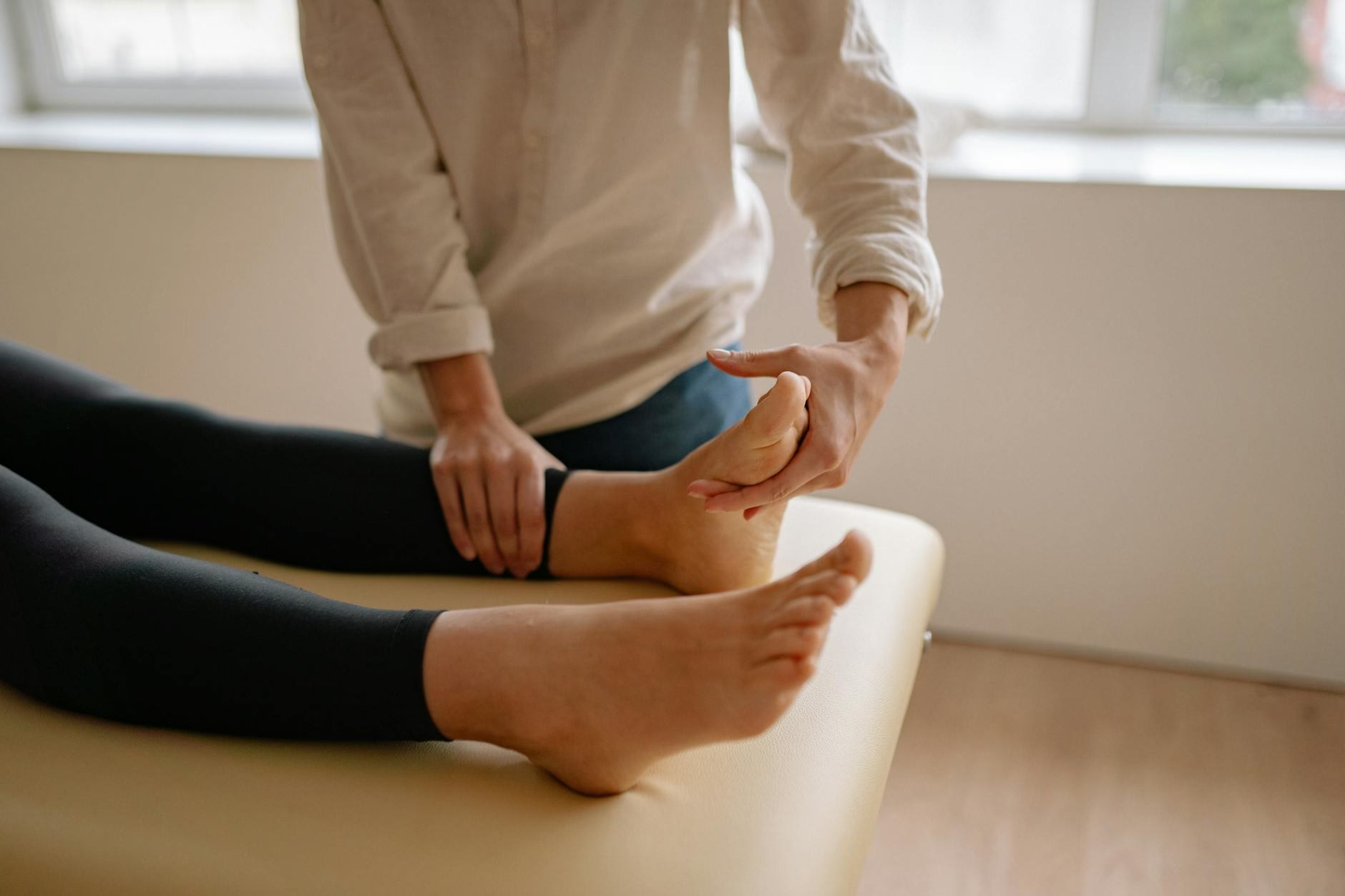
Arch support works by providing a stable foundation that helps to correct the biomechanical imbalances often seen in flat feet, leading to improved comfort and reduced pain. When your arch collapses, your foot tends to roll inward excessively, a condition known as overpronation. This inward rolling puts undue stress on various ligaments, tendons, and joints.
But with the right support, that excessive pronation is controlled. The device gently lifts and cradles the arch, realigning the foot and ankle into a more neutral position. This realignment allows the foot to distribute weight more evenly across its structure, reducing pressure points and the strain on muscles and connective tissues like the plantar fascia.
Understanding Excessive Pronation
Excessive pronation is a common characteristic of flat feet, where the ankle rolls inward beyond its natural range during walking or running. This can lead to a host of problems, including plantar fasciitis, bunions, shin splints, and even knee pain. The foot’s natural shock absorption mechanism is compromised.
Real talk: it’s like driving a car with misaligned wheels. Eventually, something’s going to wear out prematurely. Proper arch support acts as that alignment correction, guiding your foot through a more efficient and less stressful motion cycle. It helps your body absorb impact more effectively, protecting your joints.
The Biomechanics of Effective Arch Support
Effective arch support doesn’t just prop up your foot; it actively influences your gait. It encourages the foot to transition smoothly from heel strike to toe-off, promoting a more natural propulsion. This biomechanical correction reduces the muscular effort needed to stabilize the foot, leading to less fatigue and discomfort over time.
I’ve found that many people are surprised by how much difference this makes. It’s not just about feeling a bump under your arch; it’s about the entire kinetic chain responding positively. According to the American Academy of Orthopaedic Surgeons, proper foot alignment is fundamental to preventing musculoskeletal issues throughout the body. That’s a big deal.

When you walk with proper support, the repetitive stress on the soft tissues of your feet is significantly diminished, allowing for faster recovery from daily activities and a reduced risk of injury during exercise.
Types of Arch Support: Finding Your Ideal Solution
When it comes to arch support, you’ve got options, ranging from readily available over-the-counter inserts to specialized custom orthotics. The best choice for you really depends on the severity of your flat feet, your activity level, and your specific symptoms. It’s not a one-size-fits-all situation.
Understanding the differences is key to making an informed decision. Some people might find adequate relief from a simple, affordable insert, while others will genuinely need the precision and personalized fit of a custom device. Don’t underestimate the impact of choosing wisely.
Over-the-Counter vs. Custom Arch Support Orthotics
Over-the-counter (OTC) arch support insoles are widely available and offer a general level of support. They come in various arch heights and materials, often categorized as low, medium, or high arch. They’re a good starting point for mild to moderate flat feet or for those seeking initial relief without a prescription.
Custom orthotics, on the other hand, are prescription medical devices molded precisely to your feet by a podiatrist or orthotist. They provide highly specific support and correction, making them ideal for severe flat feet, persistent pain, or specific biomechanical issues. They’re an investment, but often worth it for significant problems.
| Feature | Over-the-Counter Arch Support | Custom Arch Support Orthotics |
|---|---|---|
| Cost | ₱500 – ₱3,000 | ₱5,000 – ₱20,000+ |
| Fit | General, based on shoe size | Precision-molded to your foot |
| Support Level | Moderate, generalized | Targeted, highly specific |
| Materials | Foam, gel, plastic | High-density plastics, carbon fiber, EVA |
| Durability | 3-12 months | 1-5 years (depending on material/use) |
| Conditions Best For | Mild flat feet, general comfort | Severe flat feet, chronic pain, specific biomechanical issues |
Material Differences in Arch Support
The material of your arch support significantly impacts its function, durability, and comfort. Softer materials like foam or gel offer cushioning and mild support, great for general comfort but less effective for significant biomechanical correction. They tend to wear out faster, too.
Firmer materials, such as rigid plastics or carbon fiber, provide more substantial and durable support. These are typically found in custom orthotics and are designed for maximum control of foot mechanics. Then there are semi-rigid options, often made from EVA (ethylene-vinyl acetate), which balance flexibility with support. Choosing the right material for your activity level is important.
The longevity of these materials varies greatly. While a foam insert might feel great initially, it can compress within weeks, whereas a semi-rigid EVA or plastic support maintains its shape for months or years.

How to Choose the Best Arch Support for Your Feet: A Step-by-Step Guide
Choosing the right arch support can feel overwhelming, but a systematic approach makes it much easier. You’re looking for something that provides comfort, corrects your foot mechanics, and fits your lifestyle. Don’t rush this process; your feet will thank you.
- Assess Your Arch Type: Stand normally and look at your foot arch. If your entire sole touches the ground, you have flat feet.
- Consider Your Activity Level: Athletes demand different support than sedentary workers.
- Start with OTC Options: For mild cases, begin with a high-quality OTC insole.
- Pay Attention to Fit: The insole should fit into your shoe without crowding your toes.
- Seek Professional Guidance: If pain persists, consult a podiatrist for a diagnostic evaluation.
- Be Patient with Adjustment: Gradually increase wear time to allow your feet to adapt.
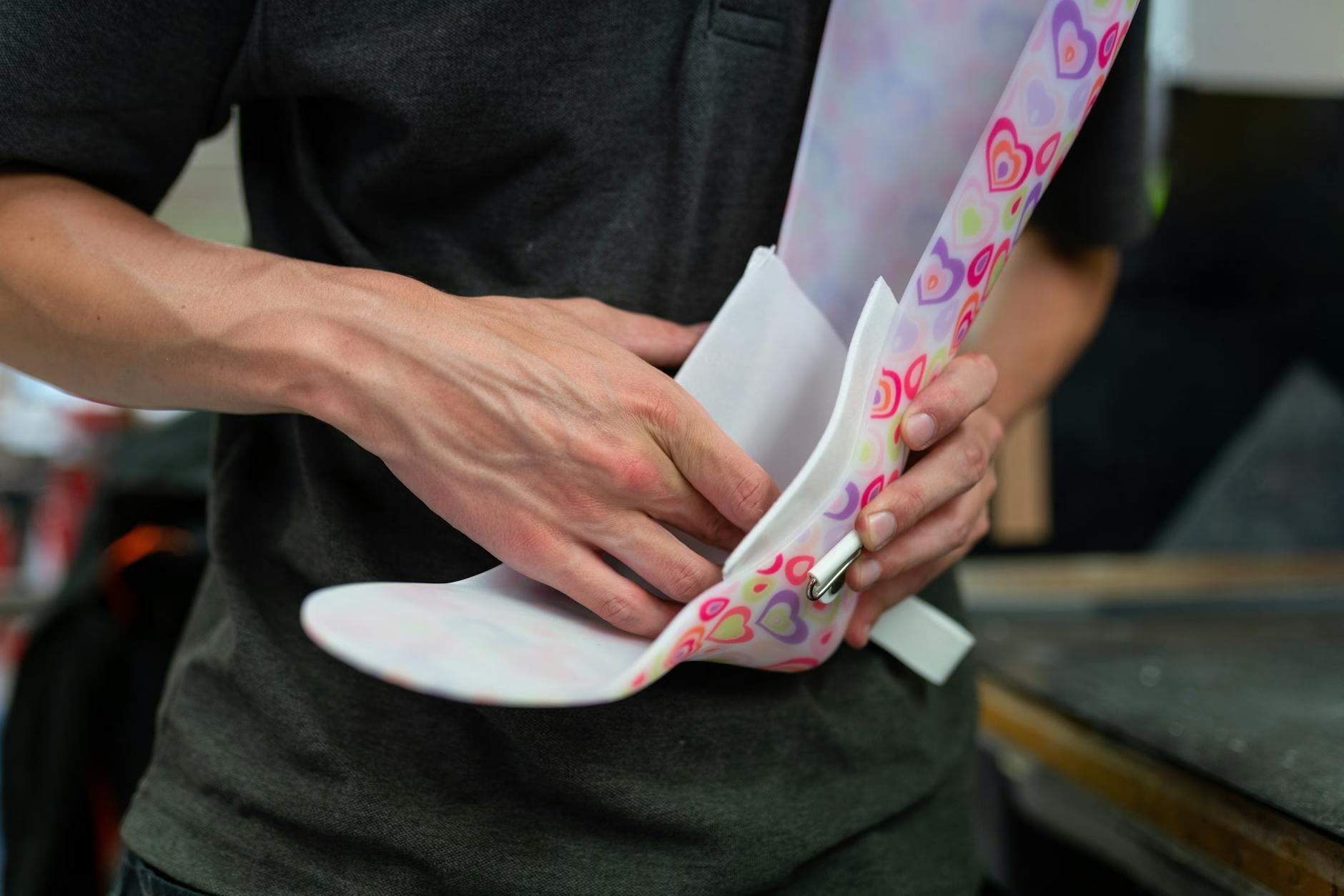
Finding the right fit often requires trial and error. Don’t be discouraged if the first pair doesn’t feel perfect; sometimes a slight adjustment in arch height or material is all that’s needed for total relief.
The Lasting Benefits of Consistent Arch Support Use
Consistent use of appropriate arch support offers far more than just immediate pain relief; it can lead to significant long-term improvements in your overall quality of life. Think about it: when your feet are happy, your whole body benefits.
- Reduced Foot Pain: Alleviates discomfort from standing and walking.
- Improved Posture: Positively impacts the alignment of your ankles, knees, and spine.
- Enhanced Stability: Provides a secure base, reducing the risk of sprains.
- Increased Endurance: Efficient movement leads to less fatigue.
- Prevention of Deformities: Helps stave off bunions and hammertoes.
Investing in quality arch support is an investment in your musculoskeletal health. It’s a proactive step that can save you from years of discomfort and costly treatments down the line.
Dr. Aliyah Rahman, Orthopedic Specialist
Separating Fact from Fiction: Common Arch Support Myths
- Myth: Arch support will weaken your foot muscles. Reality: Well-designed support corrects mechanics, allowing muscles to work more efficiently, rather than replacing their function.
- Myth: All arch supports are the same. Reality: There is a vast range in types, materials, and support levels.
- Myth: You only need support if you have pain. Reality: Many use support preventatively to enhance performance and prevent future issues.
Frequently Asked Questions About Arch Support
How often should I replace my arch support insoles?
OTC insoles should be replaced every 6 to 12 months. Custom orthotics can last anywhere from 1 to 5 years depending on wear.
Can arch support cure flat feet?
No, it manages symptoms and prevents progression. It does not permanently change the bone structure of an adult foot.
Is it okay to wear arch support all the time?
Yes, consistent use maintains alignment and provides the most cumulative benefit.
Taking the Next Step Towards Healthier Feet
Getting the right arch support can be a game-changer. It’s about investing in your long-term mobility. Don’t let flat foot pain dictate your life or limit your activities.
Ready to find the perfect footwear companion? Check out our guide on choosing the right running shoes.